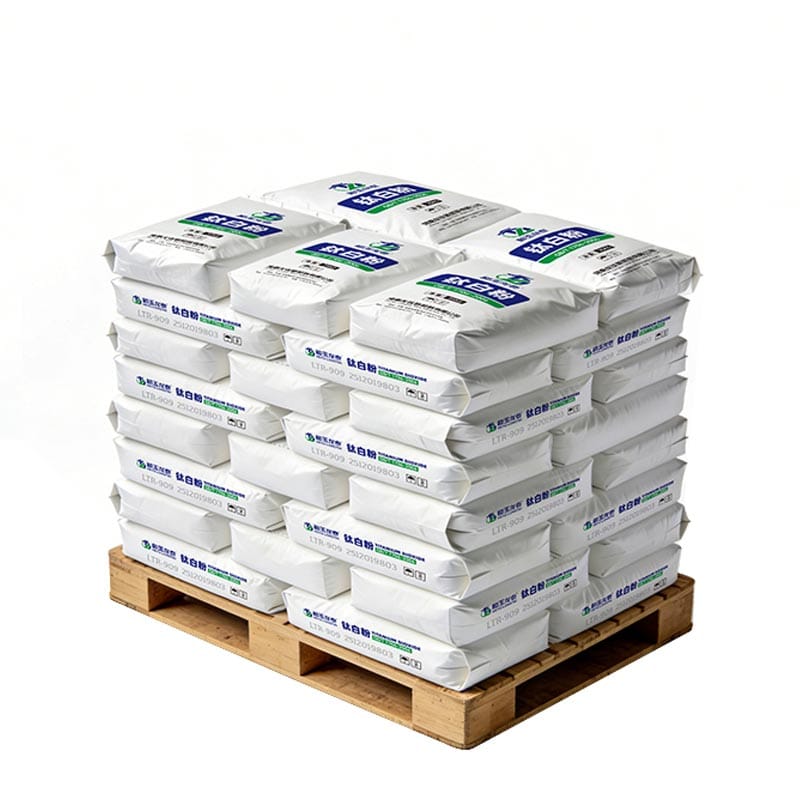
| Kaolin Powder |
| Index Item | Unit | Executive Standards |
| Brightness | R457,% | ≧93 |
| Particle size | —2µm,% | 78±3 |
| Oil absorption | g/100g | 60±3 |
| Sieve residue (45µm) | % | ≤0.01 |
| PH Value | | 6.0-8.0 |
| Moisture | % | ≤0.8 |
| Volume density | g/cm³ | 0.4-0.6 |
| True density | g/cm³ | 2.65-2.75 |
| Parameter | Specification | Test Method |
|---|
| Product Name | Kaolin Z-90 (Calcined Kaolin) | – |
| Type | Calcined Kaolin / China Clay | – |
| Brightness (R457) | ≥93% | ISO 2470 |
| Particle Size (≤2µm) | 78±3% | Laser Diffraction |
| Oil Absorption | 60±3g/100g | ASTM D281 |
| Sieve Residue (45µm) | ≤0.01% | – |
| pH Value | 6.0-8.0 | ISO 787-9 |
| Moisture Content | ≤0.8% | ISO 787-2 |
| Bulk Density | 0.4-0.6 g/cm³ | – |
| True Density | 2.65-2.75 g/cm³ | Pycnometer |
| Appearance | Fine white powder | Visual Inspection |
| Packaging | 25kg woven bag | – |
| Storage | Cool, dry place away from moisture | – |
Kaolin Z-90 calcined kaolin is extensively used in various coating applications due to its excellent hiding power, gloss control, and cost-effectiveness.
Architectural Paints
- Interior and exterior wall paints
- Latex paints and emulsion coatings
- Mastic and textured coatings
- Primer and undercoat systems
Industrial Coatings
- Protective coatings
- Marine coatings
- Automotive refinish coatings
- Industrial maintenance coatings
Functional Benefits in Coatings
- Hiding Power: Platelet morphology enhances light scattering and opacity
- Gloss Control: Provides excellent gloss and sheen control in various coating systems
- TiO2 Extension: Partial titanium dioxide replacement (10-30% reduction) while maintaining opacity
- Film Formation: Improves film integrity and mechanical properties
- Barrier Properties: Enhances barrier properties against moisture and chemicals
- Cost Reduction: Significantly reduces formulation costs compared to pure titanium dioxide
Kaolin Z-90 is an excellent extender and functional filler for printing inks, providing improved printability, color development, and surface properties.
Flexographic Inks
- Water-based flexographic inks
- Solvent-based flexographic inks
- UV-curable flexographic inks
Gravure Inks
- Publication gravure inks
- Packaging gravure inks
- Industrial gravure inks
Screen Printing Inks
- Textile screen printing inks
- Industrial screen printing inks
- Graphics screen printing inks
Functional Benefits in Inks:
- Color Development: Enhances color strength and development
- Printability: Improves ink transfer and laydown on substrates
- Gloss Enhancement: Provides excellent gloss control in finished prints
- Viscosity Control: Contributes to stable viscosity and rheology
- Setoff Resistance: Reduces ink setoff in printing processes
- Surface Smoothness: Improves surface smoothness and print quality
Recommended Dosage:
- Flexographic inks: 3-10% by weight
- Gravure inks: 5-15% by weight
- Screen printing inks: 5-12% by weight
Packaging: 25kg woven bag
Remarks: The above data is for reference only. For specific applications, please contact the supplier. Product specifications are subject to the corresponding inspection report.
Q: What is the difference between calcined kaolin and hydrated kaolin?
A: Calcined kaolin undergoes thermal treatment at high temperatures (900-1000°C) to remove hydroxyl groups, which increases brightness, opacity, and develops platelet morphology. Hydrated kaolin retains water of hydration and has different properties. Calcined kaolin Z-90 offers superior brightness (≥93% R457) and hiding power compared to hydrated kaolin.
Q: How does Kaolin Z-90 compare to titanium dioxide in terms of hiding power?
A: While titanium dioxide provides superior hiding power per unit weight, Kaolin Z-90 can partially replace 10-30% of titanium dioxide while maintaining acceptable opacity. The platelet morphology of calcined kaolin contributes to light scattering and hiding power. For cost-sensitive applications, Kaolin Z-90 offers an excellent balance between performance and cost.
Q: What is the recommended dosage of Kaolin Z-90 for coatings?
A: For architectural coatings, recommended dosage is 5-15% by weight. For industrial coatings, 3-10% by weight is typical. For primer systems, 10-20% by weight is recommended. Always conduct preliminary trials to determine optimal dosage for your specific application and performance requirements.
Q: Is Kaolin Z-90 compatible with water-based and solvent-based systems?
A: Yes, Kaolin Z-90 is compatible with both water-based and solvent-based formulations. The low oil absorption (60±3g/100g) and stable pH (6.0-8.0) ensure good compatibility with various binder systems. However, always conduct compatibility testing with your specific formulation before large-scale use.